About Us

Our Businesses
Investors

Responsibility

Media

Careers

About Us
Our Businesses
Investors
Responsibility
Media
Careers

Our Ingredients businesses create products from a range of agricultural commodities.
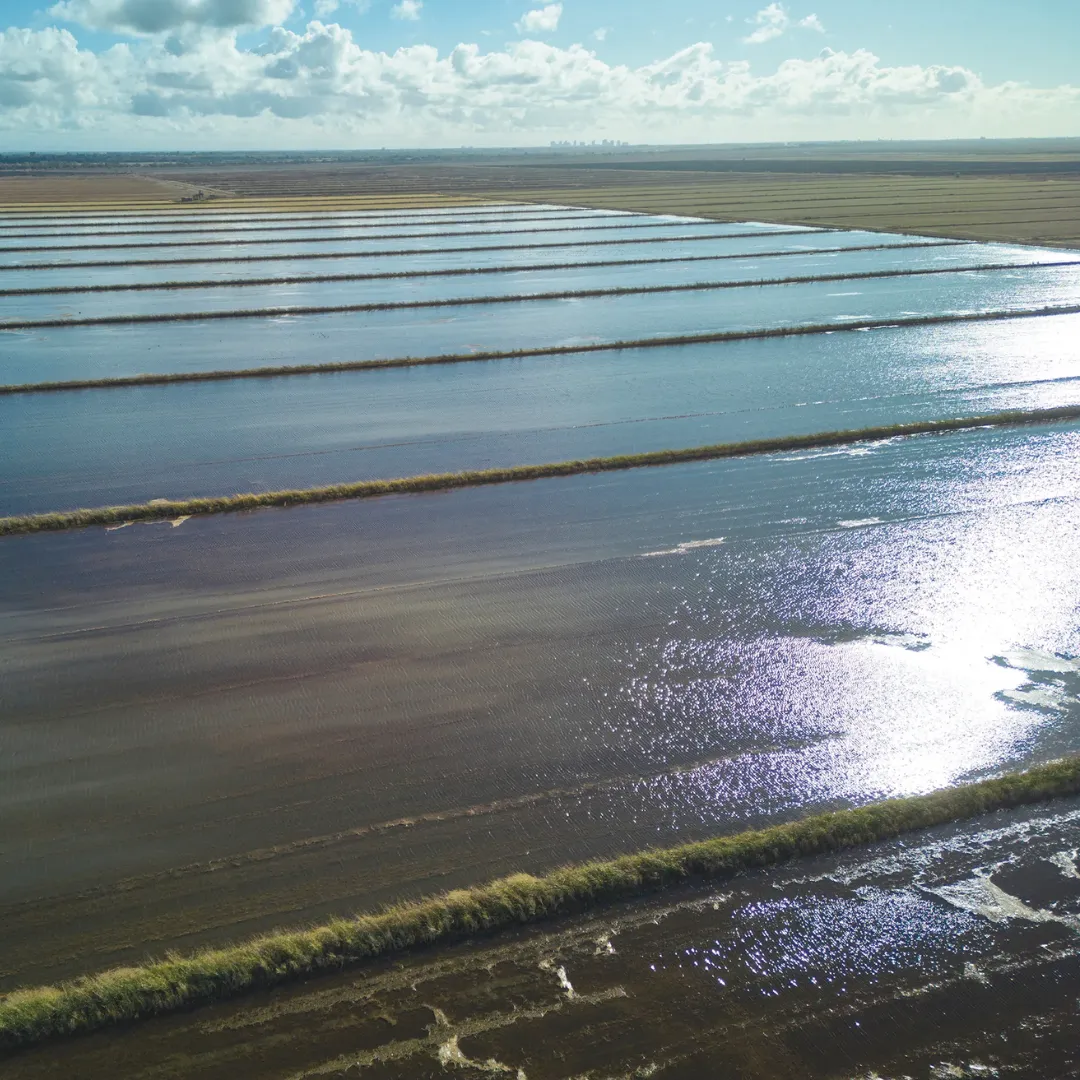 A harvested rice field, California, United States
Our Ingredients businesses source agricultural ingredients linked to potential risks related to deforestation and biodiversity loss, such as palm oil. Their practices aim to manage those risks wherever relevant.
As part of the Group’s membership of the Roundtable on Sustainable Palm Oil (‘RSPO’), AB Mauri is committed to sourcing palm oil that is certified to RSPO standards. Where physical certification is challenging, AB Mauri purchases RSPO book and claim credits through its sourcing partner AchieveNow, which maintains direct relationships with RSPO-certified producers globally and conducts due diligence. In 2026, AB Mauri’s UK and Ireland business increased the proportion of palm oil purchased through Identity Preserved, Segregated and Mass Balance RSPO supply chains to 98%.
AB Mauri’s UK and Ireland business operates to the standards set out in its Responsible Soya Sourcing Policy. The policy includes commitments to sourcing deforestation and conversion-free, non-GMO, fully traceable soya, requiring direct suppliers to adopt and cascade the same commitment. More than 99% of the business’s soya products were sourced from crops grown in Canada, which is identified at low-risk of deforestation by the SAI platform, and they are certified through the Canadian Identity Preserved Recognition System for soybeans.
Some of ABFI's businesses source agricultural raw materials that can be associated with environmental and social risks, including deforestation and biodiversity loss. Some of those businesses use Sphera Risk, an online risk management procurement tool to assess the environmental risk across their sourcing locations and raw material supply chains.
ABITEC, which sources a limited amount of palm-related raw materials, has covered all of its palm oil ingredients using the RSPO-certified book and claim supply chain model since 2016.
PGP International primarily sources rice and rice flour from California and the southern states of the US. The business continues to participate in the USA Rice Millers’ Association, an organisation advocating for environmental responsibility, biodiversity preservation and conservation efforts as a part of the USA Rice Group. The business is also strengthening traceability, supplier verification and deforestation risk assessment in preparation for the EU Deforestation Regulation.
ABFI uses certain animal-derived raw materials within parts of its portfolio and, in limited cases, conducts animal testing via third-party organisations to meet regulatory requirements. Its approach focuses on sourcing practices and alignment with applicable animal welfare standards throughout the value chain. Where animal testing is required, ABFI applies the principles of the 3Rs: Replacement, Reduction, and Refinement. ABFI works with qualified third-party organisations to minimise the need for animal testing, avoid unnecessary repeat testing, and support the use of alternative methods wherever scientifically valid and accepted by regulators, including New Approach Methodologies such as in-vitro systems and computer modelling. Through these measures, ABFI seeks to meet high standards of animal welfare while maintaining product quality, safety and regulatory compliance.